Wednesday, November 16, 2005

ICT and people with disabilities


The second day begun with the UNESCO workshop ICT and people with disabilities. Tunisian teacher of the Deaf, ms Senkez Latifa followed the presentations with the help of two french interpreters.

When coming to the venue on tuesday my first impression was: this is a big happening! But it was a bit false one, because the second day (wednesday, the first official day of the summit) was enormous and shadowed the initial impressions. Security is in class AAA (c.f. WAI standards) and programme seems to start late every day. It takes only 15 minutes from the centre to the venue, but it takes altogether something around 45 minutes to get finally in.
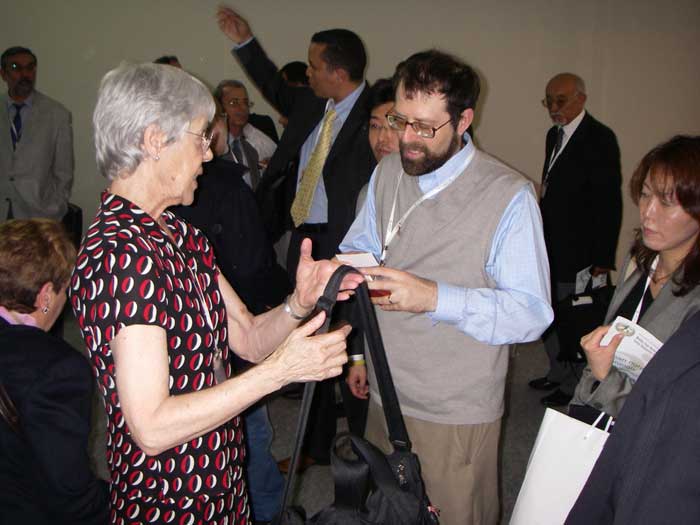


I have been wondering earlier why organisers of the conferences tend to schedule everything in so tight slots. Today, 16th November, we did not have time at all for a discussion in the workshop ICT and disabled. That was pity because as Markku pointed out UNESCO has not mentioned signed languages in their documents. However, the workshop had very good presentations of the sign language projects, e.g. in Brazil. Also, there was sign language interpreters working again (as in the first Global forum on 15th November) and moderators referred couple times to the importance of sign languages to the Deaf people.

2 Comments:

Blogger Markku Jokinen said...

Dear Antti,

Thank you very much for your news from WSIS Tunis!

It is always important that people can meet representatives of WFD and Deaf Community at high level of international events like this one. Seeing Deaf and hearing people and interpreters using Sign Language has always some impact.

Soon there will be Education and ICTs by UNESCO (14.15-18.00). It is extremely important to stress role and limitless opportunties of ICT in deaf education. Namely, it is only just recently that sign language using student can express their ideas, thoughts, problem solving and cognitively demanding tasks directly in students' first language through ICT. Thus it gives strong metalinguistic base for learning other languages and large conceptual frameworks and cultures.

Opportunities to communicate in several sign languages and written languages have also expanded enormously through webcams and internet. This is really revolutionary and thus curricula, methods and theoretical frameworks of deaf education have to follow this big change.

UNESCO during International Mother Language Day this year has stressed importance of Sign Language and Braille in education and other spheres of life. It could be wonderful if this valuable support and principle could be brought up in discussions today afternoon.

Good luck to you with your work, Antti!

Best regards,

Markku


17.00-19.00: the ECOSOC NGO Roundtable/workshops. Room La Goulette

12:53 PM  
Anonymous Antti said...

Markku
Unfortunately the UNESCO stand was too noisy for the terps to work decently. However, we managed to follow two presentetations and met also two Deaf tunisians. What a coincidence. Instead of the UNESCO meeting we decided to attend eGovernence workshop and that was excellent!

8:27 PM  

Post a Comment

<< Home